
Combined Sewer Problems
In 1915 Youngstown was a flourishing industrial city in the midst of a population boom. As the United States geared up to enter World War I, there was no shortage of manufacturing jobs.
“It was a very quickly growing and expanding city with a very vibrant steel industry. There was a lot of money being made,” said Bill Lawson, executive director of The Mahoning Valley Historical Society.
“At the same time ... the city had a lot of trouble with growing pains – having adequate housing for people, adequate sanitation,” he said. “There was a lot of water-borne disease that came through the area because of contamination of the water.”
On top of complaints from residents, the city was under pressure from the U.S. government. Concerned by the massive amounts of industrial waste and raw sewage being dumped into the Mahoning River, the federal government seized control of the river – cutting off a water supply needed by what Lawson dubs the “main cog” in the local economy: the steel industry.
“The city’s back was pretty much against the wall,” he said. If steel making was to continue, the city would have to build a sewer system.
Short on funds and time, city officials – namely city engineer F.M. Lillie – “drew the straightest, cheapest course they could devise,” wrote Williams-Searle.
The combined sewer was run through Mill Creek Park and is the focus of this project.
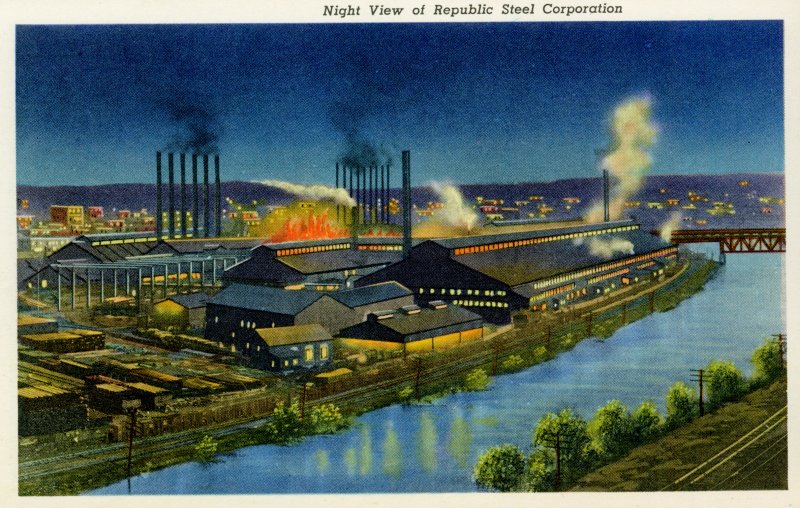
Steel City Days
Combined sewer systems were common before 1972 when the Clean Water Act gave the EPA authority to regulate pollutants entering U.S. water. The Clean Water Act aims to "restore and maintain the chemical, physical, and biological integrity of the nation's waters". Under this act, the EPA has set wastewater standards. These federal guidelines require municipalities to renovate these systems.
21st Century
In 2002 the Federal EPA ordered the city to do $310 million worth of work to reduce sewer overflows, but it was negotiated down to $160 million in 2014 with the expectation it would be finished in 20 years. The City has tried to get that price down further, but federal authorities have rejected those requests.
Mill Creek Park has seen some of the consequences of raw sewage being discharged into bodies of water. In 2015, the E.Coli levels rose to such a high concentration that thousands of fish died.
Present Day
The City of Youngstown's Mill Creek Interceptor project aims to meet the requirements of the Federal EPA by:
- Reducing sewer overflows: Prevent untreated sewage from entering Mill Creek during heavy rains.
- Improving water quality: Protect Mill Creek and downstream waterways from pollution.
- Upgrading infrastructure: Replace aging sewer lines to improve system reliability.
- Complying with regulations: Meet environmental standards set by state and federal agencies.
- Enhancing community health: Reduce risks associated with contaminated water.
This project is part of broader efforts to modernize the city's wastewater management system and protect local waterways and the community.

The Mill Creek Sewer Interceptor Project is one of the many City projects aimed at reducing Combined Sewer Overflows (CSO) and updating the City's sewer and wastewater treatment infrastructure.